
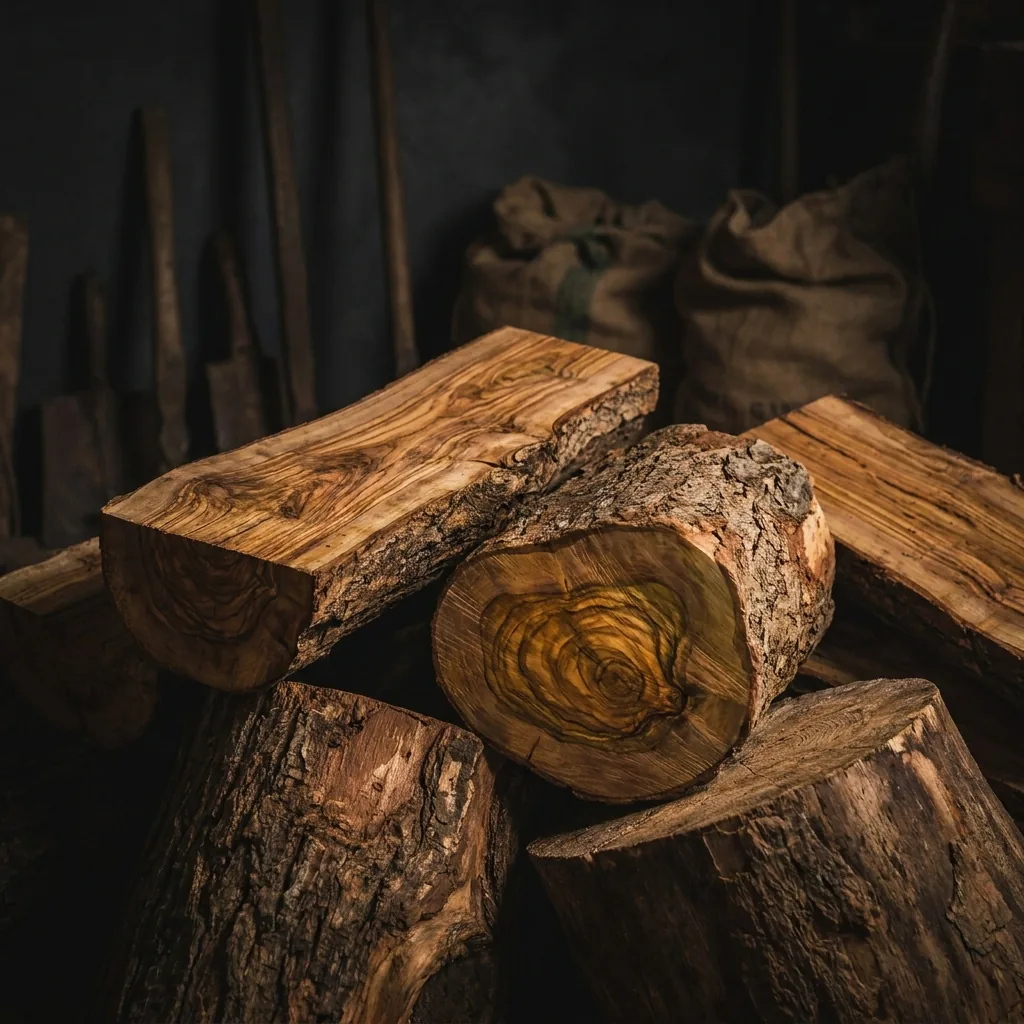
For an olive wood collection, grain is not a decorative layer applied at the end. It is a visible part of the material story. For a buyer, the useful question is not whether every piece will look identical, but whether the range presents variation clearly and consistently enough for the intended sales channel.
01
Read variation as part of the material, not as a deviation from it.
Wood is a natural material, and research on olive wood compares properties across different cultivars and different parts of a tree rather than treating every sample as one fixed profile. That does not turn a laboratory result into a product promise. It does give buying teams a better working principle: a sample image should set a visual direction, not guarantee that every future piece will repeat the same lines, tone or figure.
In a professional assortment, that principle can become an advantage. A consistent product shape paired with visibly individual grain lets the material carry part of the story on shelf, in photography and in a gift-led presentation.
Use the sample to understand the character of the range, not to expect a printed duplicate.
02
Ask for image references that make a buying decision easier.
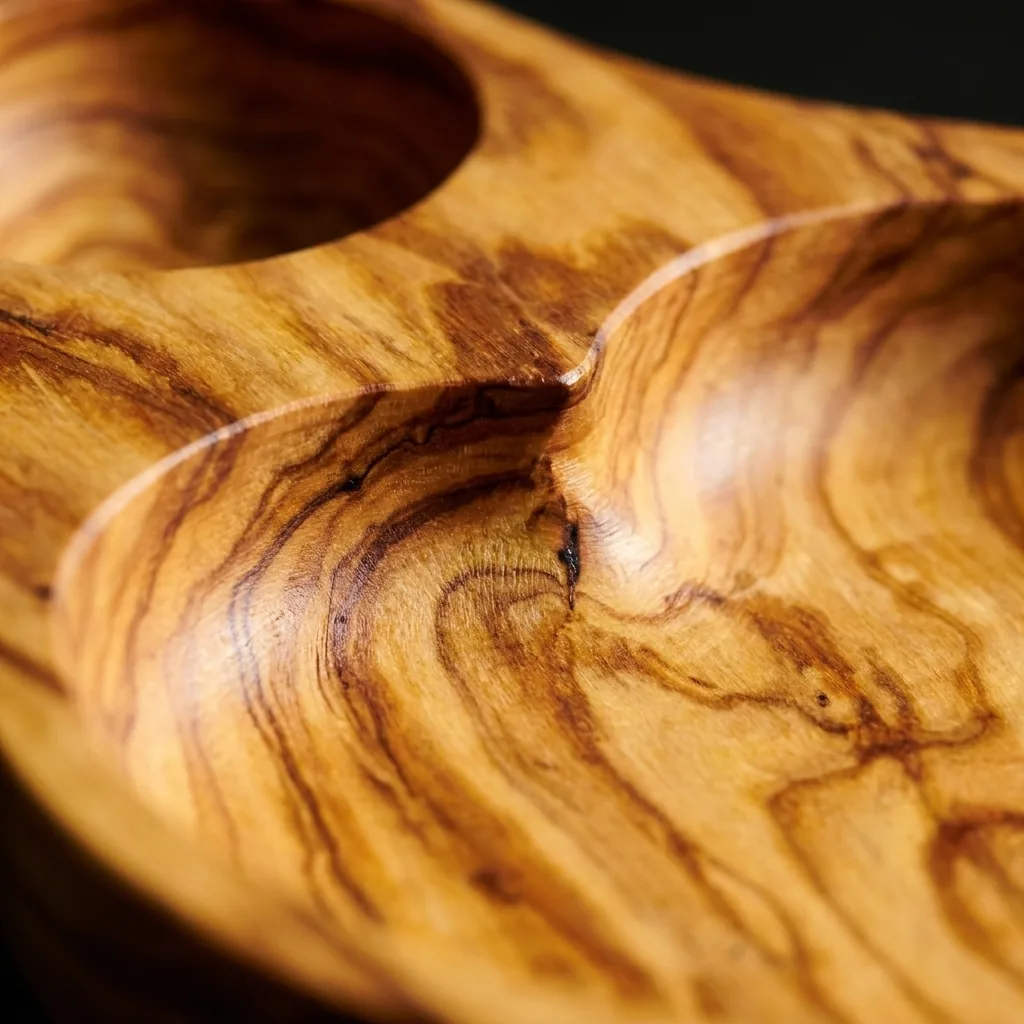
One polished hero image is useful for atmosphere, but it should not carry the entire range review. Ask for a set of views that lets the buying team compare the complete silhouette, the working surface, the edge treatment and close grain detail. When products will be sold online, include a view that shows scale and one that makes the expected natural variation legible without exaggeration.
Buyer prompt
“Can we review a small group of images that shows the product shape, a close grain detail and the range of tone visible across comparable pieces?”
03
Grain is more than an image.
Wood responds to moisture in the surrounding environment, and its movement is directional rather than uniform. The practical implication for a buying team is simple: where form, use or storage conditions matter, bring the intended application into the conversation early rather than relying on photography alone.
This is not a request to turn a material guide into an engineering brief. It is a way to make the visual review more useful: combine the grain reference with the product shape, intended context and the supplier’s confirmed product guidance.
A clearer review language
Three questions that keep a natural-material range coherent.
What must stay consistent?
Agree the visible constants: product family, proportion, use context and the overall level of finish.
What may vary naturally?
Describe grain movement, colour range and individual figure as a material characteristic, not an afterthought.
What needs approval?
Identify any visual or functional condition that requires a confirmed product-level answer before the range is selected.
04
A concise checklist for a first range review.
-
Review a complete product image and a close material image together.
-
Decide how much natural visual variation your retail, online or hospitality context can communicate clearly.
-
Keep catalog, product photography and customer-facing copy aligned on what is representative rather than identical.
-
Bring use, storage and any performance requirement to the supplier for confirmation before a final buying decision.
Research basis
What this article does and does not claim.
This guide draws on general wood-science references and olive wood studies to frame buyer questions. It does not state a product specification for Olizou or replace product-specific confirmation.